NeutralImpact 72
Canary’s Injective ETF debuts on Nasdaq with exposure to staking rewards
XPERTRAX11/5/2026, 4:53:56 PM755 views

Summary
Canary Capital's Staked INJ ETF debuts on Nasdaq, giving investors exposure to Injective's INJ token plus staking rewards reflected in NAV.
INJ/USDT$6.22-0.16%
MA7MA25MA99
Related analysis: Injective asks SEC to allow order books for tokenized stock trading
Expert analysis coming soon...
Related Market Analysis

Injective asks SEC to allow order books for tokenized stock trading
INJBTC
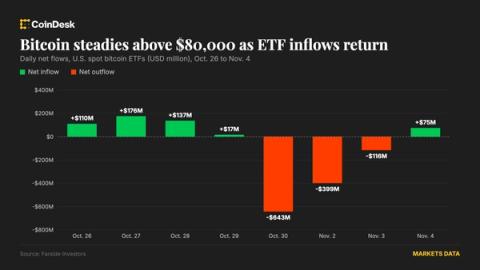
Bitcoin holds above $80,000 after Wednesday’s jump as injective rallies on staked ETF listing
BTCETH

Injective launches onchain futures market tracking Nvidia GPU rental costs
INJETH

Injective, BDACS plan Korean won stablecoin settlement for tokenized assets
INJBTC
Frequently Asked Questions
A staked ETF holds the underlying token (INJ) and delegates it to validators for staking. Staking rewards—typically 8-15% annually—accrue and are reflected in the ETF's Net Asset Value rather than distributed separately. The structure simplifies institutional participation compared to direct validator delegation.
Direct INJ ownership requires manual validator selection and yield management. The ETF automates this but introduces fee drag (typically 0.2-0.4% annually) and custodial counterparty risk. The ETF trades on Nasdaq with price discovery mechanics, potentially creating arbitrage spreads versus on-chain spot prices.
The listing reflects post-2024 SEC framework acceptance of derivative crypto structures. However, approval doesn't eliminate regulatory risk—staking-as-yield remains under examination regarding securities classification. Historical precedent from Ethereum staking ETFs suggests institutional demand, but governance uncertainties persist.
ETF risks include validator concentration (Injective's top-5 validators control ~38% of stake), protocol governance dilution, and custodial failures. Solo stakers retain control but accept operational complexity. Basis risk also emerges when ETF NAV diverges from spot INJ prices during volatile trading.
Mid-tier TVL creates liquidity constraints for large institutional positions. The ETF may improve capital efficiency by aggregating staking demand, but validator capacity limits growth. Historically, staking products stabilize at 15-25% of protocol's total staked supply once institutional participation normalizes.
#INJ staking ETF Nasdaq 2026#Canary Capital staked Injective ETF#cryptocurrency staking yield ETF products#Injective token institutional adoption#staking rewards wrapped ETF structure#mid-cap crypto ETF launches#INJ price NAV arbitrage
Want Deeper Expert Analysis?
Get insights from our verified crypto analysts with transparent track records.