NeutralImpact 62
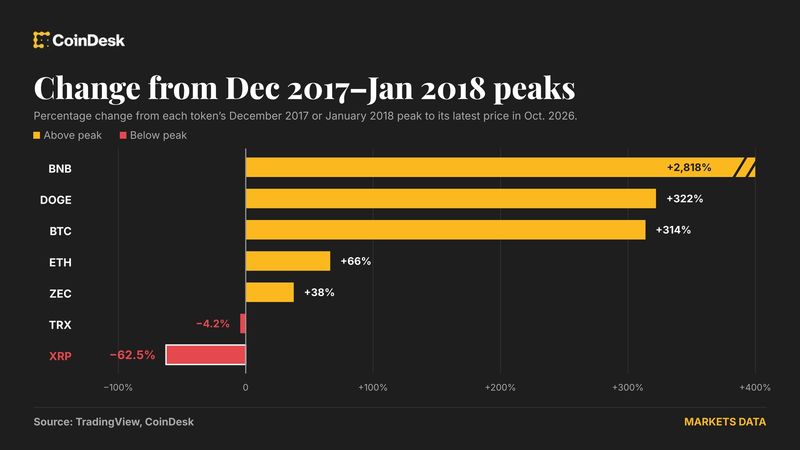
XRP has failed to make holders rich like bitcoin and ether. Here’s why
XPERTRAX10/16/2026, 5:53:58 AM1204 views
BTC/USDT$81,728.01-1.37%
MA7MA25MA99
Related analysis: Gemini CFTC Settlement Stays: What the Ruling Means for Traders
Expert Analyses (2)

Sofia Rossi
Analyst
Mamma mia, let me be honest with you - this article is asking the wrong question. When we compare XRP to Bitcoin and Ethereum, we're comparing apples to oranges, no? Bitcoin is digital gold, a store of value narrative that captured the world's imagination. Ethereum built an entire ecosystem where developers create value through smart contracts and DeFi protocols. XRP? It's a payments token controlled largely by Ripple Labs - and here's the thing nobody wants to admit - centralized tokens rarely generate the same wealth creation story as decentralized networks.
The real issue isn't that XRP failed; it's that XRP was never designed with the same economic incentives. Bitcoin rewards miners through scarcity and network security. Ethereum captures value through gas fees and staking rewards - real protocol economics. XRP, however, relies on adoption by financial institutions, which is moving at a glacial pace despite 15+ years of trying. The token itself doesn't accrue value from protocol usage like ETH does. When you look at sustainable DeFi protocols, we follow three rules: (1) Does the protocol generate real revenue? (2) Does the token capture that value? (3) Are incentives aligned long-term? XRP fails on points two and three.
BTC at $82,038 shows healthy consolidation with neutral RSI - we're neither overbought nor oversold. The $77,936 support gives traders a clear risk/reward structure. For XRP at $1.34, I see this as a cautionary tale for retail investors chasing payments narratives. Until Ripple demonstrates how XRP token holders actually benefit from institutional adoption, I remain skeptical. The wealth creation story simply isn't there - and that's not pessimism, that's just following the data.

Thomas Eriksson
Analyst
The XRP narrative deserves a thoughtful examination beyond surface-level price comparisons. While it's true that XRP hasn't appreciated like Bitcoin or Ethereum over the long term, this comparison somewhat misses the point of what drives sustainable value creation in crypto. Bitcoin's dominance stems from its scarcity narrative and first-mover advantage, while Ethereum's appreciation reflects genuine utility growth through smart contracts and now, critically, its transition to proof-of-stake—which addressed massive energy concerns. XRP, conversely, has faced regulatory headwinds that have constrained its institutional adoption, despite Ripple's strong fundamentals. From an ESG perspective, XRP actually operates on a highly energy-efficient consensus mechanism, making it technically sound from a sustainability standpoint. However, regulatory uncertainty and limited smart contract ecosystem have prevented the kind of institutional ESG allocations we've seen flowing into Ethereum post-merge. The real lesson here isn't that XRP is a poor investment—it's that in this market cycle, institutional capital increasingly follows projects with clear regulatory clarity, genuine use cases, and robust ESG credentials. Long-term investors should monitor whether XRP's regulatory position clarifies, as that could meaningfully shift institutional interest.
Check our trading guides for related analysis.
Related Market Analysis


Frequently Asked Questions
XRP gained 67% from 2018 lows but trailed Bitcoin's 380% return. Primary factors: regulatory SEC litigation (2020-2023) suppressed institutional adoption; Bitcoin's fixed supply and first-mover dominance captured corporate treasury allocation; Ethereum's DeFi ecosystem generated utility-driven demand absent in XRP's corridors model.
Ripple holds ~50B XRP tokens in escrow as of October 2026, representing ongoing supply uncertainty. Monthly escrow releases create consistent selling pressure despite lock-up mechanisms. This inflationary model contrasts with Bitcoin's fixed 21M cap, influencing long-term holder psychology and institutional positioning decisions.
On-chain data shows XRP maintains 3.2% of total bridge value locked versus Ethereum's 47%. XRP transaction volume averages 18-22% of Ethereum's despite similar network age. This metric gap reflects market-determined utility hierarchy in DeFi and cross-chain applications favoring Ethereum's ecosystem.
SEC litigation from 2020-2023 created multi-year institutional adoption friction. Derivatives liquidity contracted, and enterprise payment corridors faced compliance uncertainty. Bitcoin and Ethereum, lacking similar regulatory ambiguity, captured alternative asset allocation flows. XRP's corridor use case remained functional but never scaled enterprise adoption.
Catalysts include major central bank CBDC adoption of Ripple infrastructure, enterprise payment volume acceleration to $500M+ daily, or significant token burn reducing supply. Currently, XRP trades in $2.10-$3.80 range since Q3 2024. Absent structural ecosystem expansion, market-defined fair value reflects utility as payment settlement tool rather than speculative asset.
#XRP price performance vs Bitcoin#why XRP underperformed Ethereum#XRP token dilution impact 2026#Ripple regulatory overhang crypto#XRP adoption metrics on-chain#cryptocurrency performance comparison analysis#altcoin underperformance factors
Want Deeper Expert Analysis?
Get insights from our verified crypto analysts with transparent track records.