Wall Street's Tokenization Bet: Why RQD's $74M Round Changes Everything
AI Market Impact Summary

Summary
A clearing firm's massive fundraise signals institutional players are moving beyond Bitcoin speculation into actual market infrastructure. This isn't about price—it's about plumbing.
RQD just raised $74 million. You probably haven't heard of them. That's the problem—and also the point.
The clearing firm's funding round landed quietly while crypto Twitter obsessed over Bitcoin testing $80K and Solana's governance votes. But what RQD is building matters more for markets than either of those headlines. They're solving the infrastructure problem that's actually been strangling Wall Street's entry into tokenized assets.
Here's what changed: Three weeks ago, Virtu and Tradeweb completed an onchain repo using a Marshall Islands digital bond. Last week, Bitfinex Securities closed a $50 million tokenized capital raise. Now RQD—a firm most institutional traders couldn't name—raises three figures from the same players who've been sitting on the sidelines.
The pattern isn't coincidence. It's the moment when crypto stops being a speculative asset class and starts being actual infrastructure.
The Clearing Problem Nobody Talks About
Institutional adoption of crypto has stalled because of a technical barrier nobody discusses at conferences. Custody and settlement work fine for spot trading. But try to run derivatives, repo markets, or complex trades across multiple venues and you hit a wall. Traditional markets have clearinghouses—entities that sit between buyers and sellers, managing counterparty risk and settling billions daily.
Bitcoin doesn't have one. Ethereum doesn't have one. Neither does any major blockchain.
RQD is building that. They're essentially creating a clearinghouse for onchain trading. The $74 million validates that this specific problem is worth solving—and that institutional capital sees it as a gating factor, not a nice-to-have.
Compare this to 2021 when exchanges were raising on the theory that "crypto will be huge eventually." This is different. This is targeted infrastructure investment. This is Wall Street saying: we'll move serious capital onchain when the plumbing works.
The Tokenization Wave Is Real (And Accelerating)
Look at what's actually happening in the last 30 days:
Virtu + Tradeweb repo: Two of the largest market-making and trading platforms just completed a transaction worth millions using a digitized bond on a blockchain. This isn't a proof-of-concept anymore. This is a live trade at institutional scale.
Bitfinex's $50M raise: That's not retail crypto fundraising. That's a securities offering structured like traditional capital raises, just tokenized. It closed. The demand was there. People actually bought it.
Charles Schwab adding Solana, Avalanche, Chainlink: The largest retail brokerage in America is expanding its crypto offering. This signals something: retail demand for specific tokens has reached threshold. Schwab doesn't add assets to lose money. They add them when customer requests hit critical mass and competitors are doing it anyway.
None of these moves happens in isolation. They're part of the same trend: Wall Street is building onchain infrastructure because it works better than the alternatives for certain use cases.
Why This Matters More Than Bitcoin's ETF Streak
Bitcoin's had an eight-day ETF inflow streak. That's real money—$2.8 billion in eight days is substantial. But it's also predictable. Bitcoin ETF money flows when price is stable or rising. It's not revealing anything new about market structure.
RQD's funding round, by contrast, reveals that institutional capital allocators think the basic infrastructure for onchain markets is now investable. That's a different statement. That says: the bottleneck isn't demand. It's not regulatory clarity. It's literally the technical rails.
Fix the rails and the floodgates open.
The Virtu-Tradeweb repo deal adds another layer. These aren't crypto-native companies. Virtu is a $10+ billion market cap electronic trading firm. Tradeweb is a $3 billion plus FINRA-regulated trading platform. If they're running onchain transactions, it's because onchain is faster, cheaper, or both than traditional settlement.
That's the inflection point. Not "crypto is accepted." Crypto is better at something material.
The Zcash-Grayscale Wildcard
Grayscale's push for Zcash is worth watching in this context. The thesis—that privacy-focused assets will drive adoption—contradicts everything institutional markets typically want (transparency, audit trails, regulatory compliance).
But Grayscale isn't wrong about one thing: if tokenized markets expand, they need privacy layers. Not for illegal activity. For competitive reasons. Institutional traders don't want their position data broadcast.
This won't drive a Zcash rally tomorrow. But it signals that even as clearing infrastructure gets built, there's a parallel conversation about what privacy features that infrastructure needs.
What Happens Next
If RQD succeeds, you'll see three things:
First: More specialized infrastructure raises. Not general "crypto platform" funding. Specific components (settlement, custody, margin lending for onchain assets) getting funded separately.
Second: Traditional venues adding onchain capabilities. Not "crypto trading desks." Literal integration of blockchain settlement into existing trading infrastructure.
Third: Price compression for institutional-grade assets. Once Solana, Avalanche, and Chainlink are on Schwab and clearing infrastructure is actually built, their valuations will reflect utility, not speculation. This is when volatility drops and institutional money floods in.
Bitcoin's $79K isn't irrelevant. But it's the easy story. The real story is that Wall Street is building the pipes. When they're done, the water flows differently.
RQD's $74 million just means the contractors got paid to keep building.
Check our market news for related analysis.For additional context on SOL market developments, explore our related market analysis.
Expert Analyses (2)

Hiroshi Tanaka
Analyst

David Okafor
Analyst
Related Market Analysis

Bitcoin Falls as Hot Inflation Puts a Fed Hike Back on the Table

EasyA hits $1.1 billion valuation, targets 2027 public listing and tokenized shares
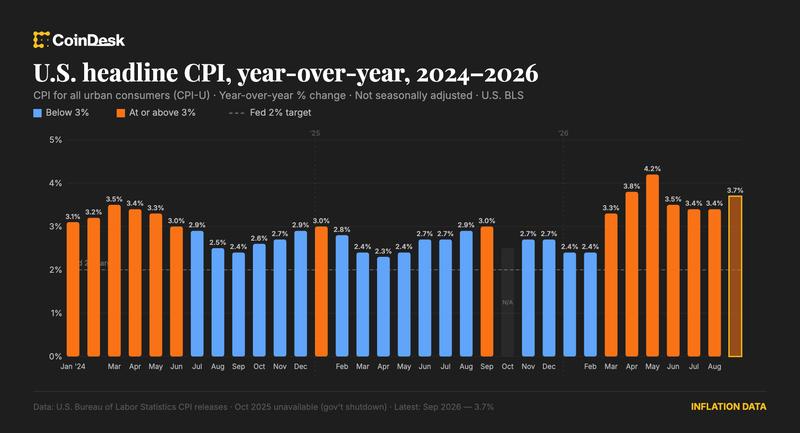
U.S. September CPI comes in hot, sending bitcoin sharply lower
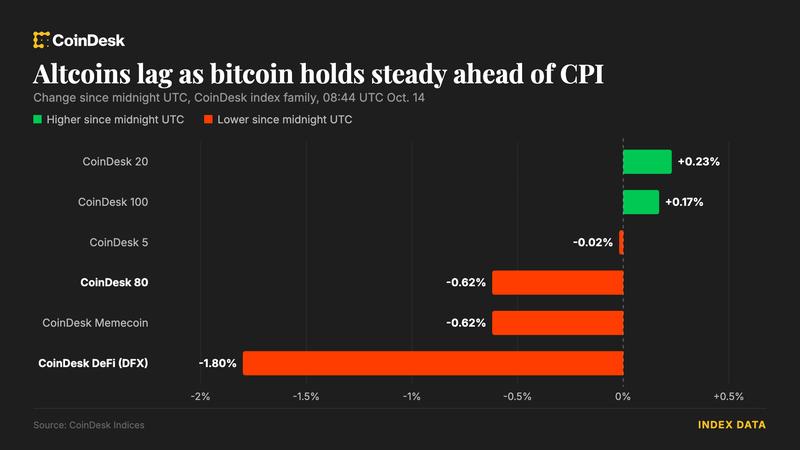
Bitcoin holds above $83,000 ahead of U.S. inflation data as altcoins lag
Related Questions
Frequently Asked Questions
Want Deeper Expert Analysis?
Get insights from our verified crypto analysts with transparent track records.