Tron's Quantum Gamble: Why Crypto's Post-Quantum Push Matters Now
AI Market Impact Summary

Summary
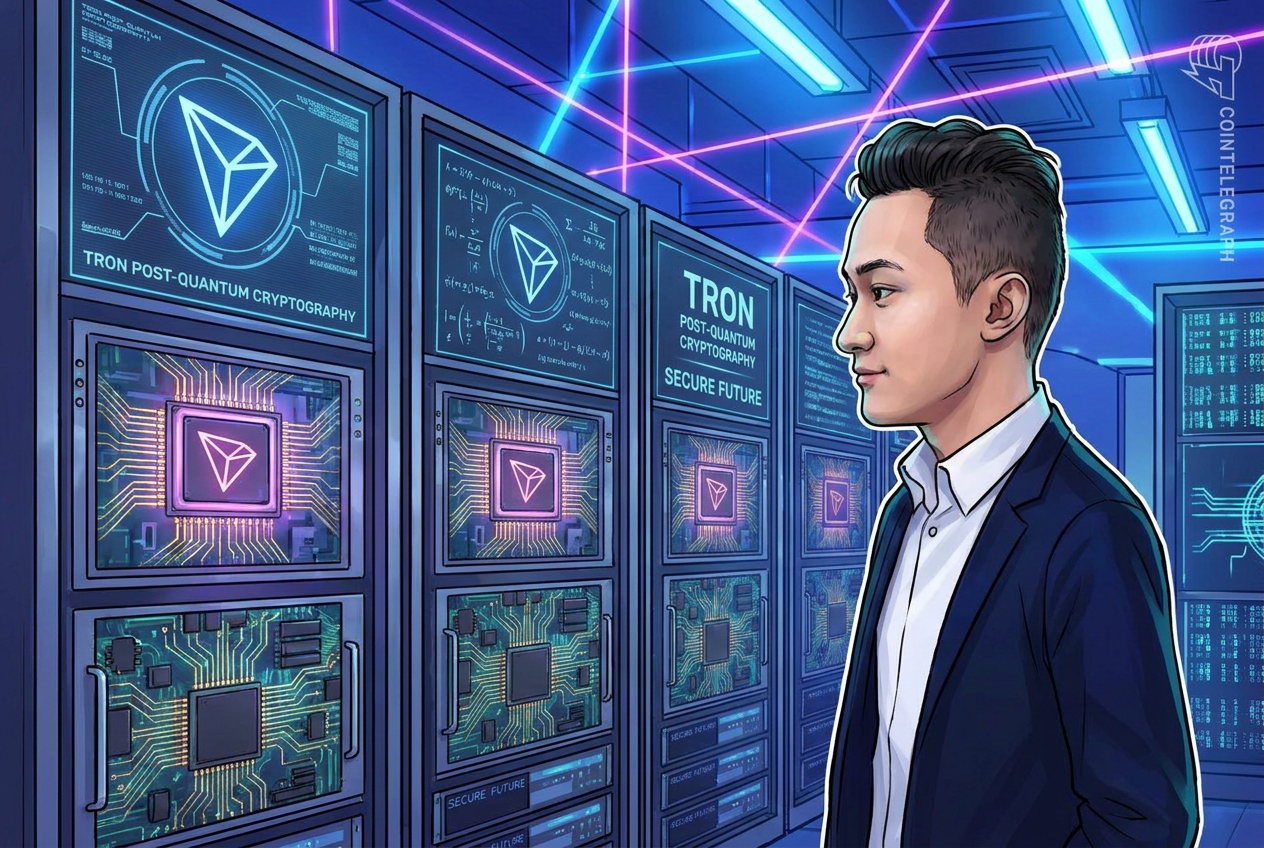
Justin Sun claims Tron went live with post-quantum cryptography on testnet. But here's what actually matters: Does anyone else care, and when does it move beyond the lab?
Justin Sun announced this week that Tron's post-quantum cryptography infrastructure has gone live on testnet. The claim landed in a sea of noise—Ether ETF outflows, Bitcoin's one-year trauma check, tokenized commodities catching fire. Nobody stopped to ask the obvious question: Why should this matter to you right now?
Let's separate the signal from Sun's hype machine.
The Real Problem Tron Is Solving
Post-quantum cryptography isn't academic theater. It's insurance against a threat that doesn't exist yet but will. Quantum computers—the ones that can crack standard encryption—don't work today. But they're coming. When they do, every Bitcoin address, every Ethereum smart contract, every Tron token transfer secured by current cryptographic standards becomes vulnerable.
The math is brutal. Bitcoin uses ECDSA (Elliptic Curve Digital Signature Algorithm). Ethereum's Keccak-256 hash function. These work because factoring large numbers takes classical computers millennia. A sufficiently powerful quantum machine solves it in hours.
The National Institute of Standards and Technology published its first post-quantum cryptographic standards in August 2024. That's the green light. That's when this stopped being theoretical.
Tron moving to testnet means they're actually trying to be first. That matters politically. It doesn't matter much operationally yet.
The Testnet-to-Mainnet Gap Is Everything
Here's where the story gets real: Running post-quantum crypto on a test network with no value at stake is not the same as securing $15 billion in assets on a live chain.
Bitcoin's network has 21 million coins. Ethereum processes $1 trillion annually. Tron handles $4 billion in TVL across its DeFi ecosystem. You don't just flip a switch on cryptographic infrastructure and hope. One bug. One implementation flaw. One overlooked edge case in the quantum-resistant algorithm. Billions evaporate.
That's why nobody else is rushing. Bitcoin's developers have been discussing quantum-resistant upgrades for three years. Ethereum's roadmap mentions it. But both are moving deliberately. Sun loves moving fast.
Why Sun Moves First (And Why That's Risky)
Tron isn't bigger or more technically sophisticated than Bitcoin or Ethereum. But it's more willing to break things. Sun has bet Tron's entire strategy on being first to market with features that matter—DeFi speed, low fees, tokenization tools. Post-quantum crypto fits that pattern.
If it works, Tron gets the narrative: safest blockchain, first quantum-ready, industry leader. Institutions worried about 2035 infrastructure security pick Tron.
If it breaks—if there's a vulnerability, if the implementation creates a fork, if it slows the network—Sun's credibility takes another hit. Tron already deals with perception problems. This is either a checkmate move or a expensive press release.
The Institutional Question Nobody's Asking
Here's the real tell: Has any major financial institution signaled they're waiting for post-quantum crypto to move their assets on-chain?
No.
BlackRock doesn't care. Fidelity isn't waiting. PayPal isn't asking. The enterprises actually deploying capital in crypto aren't saying, "We'll join when you have quantum resistance."
They're saying other things. Regulatory clarity. Insurance frameworks. Custody standards. Stablecoin guarantees.
That's not to say post-quantum crypto is irrelevant. It's essential infrastructure. But it's infrastructure for a problem that hits in 2035, maybe 2040. We're in 2025. Institutional adoption moves on current problems.
What Happens Next Matters More Than What Happened Today
The real test starts in Q2 2025. Does Tron move post-quantum from testnet to mainnet? If yes, does it break anything? Do other chains follow? Does the community actually adopt it, or does it sit there unused?
Bitcoin's most likely path: A soft fork that allows quantum-resistant keys to coexist with current ones. No forced migration. No drama. Takes five years to implement.
Ethereum's path: Similar. Gradual. Consensus-driven. Not sexy.
Tron's path: Ship it faster, claim dominance, let the market decide if it's worth it.
That's not inherently wrong. It's just different risk profiles. For institutions, different is a deal-breaker. For speculators betting on first-mover advantage, it's a thesis.
The Real Story
Sun's post-quantum announcement is true. It's also not the inflection point it sounds like. It's a technical milestone in a very long race against a threat that's still years away.
Watch what happens on mainnet. Watch if Ethereum or Bitcoin announce their own timelines. Watch whether any major crypto service actually migrates users to quantum-resistant addresses without an explicit crisis forcing the move.
Until then, this is Tron scoring points in a game that institutions aren't even playing yet. That doesn't make it meaningless. It makes it early.
For additional context on TRX market developments, explore our related market analysis.
Expert Analyses (2)

Alex Kim
Analyst

James Mitchell
Analyst
Related Market Analysis
Justin Sun says Tron’s post-quantum cryptography has gone live on testnet

Polygon taps TRON’s $94 billion stablecoin supply for seamless cross-border transfers
US Senator Blumenthal Calls Tether's USDT a 'Superhighway' for Iranian Sanctions Evasion

State hackers drive 420% surge in onchain malware, Chainalysis finds
Related Questions
Frequently Asked Questions
Want Deeper Expert Analysis?
Get insights from our verified crypto analysts with transparent track records.