South Korea's Bank-Crypto Deal Exposes the Real Regulation Game
AI Market Impact Summary

Summary
While Seoul moves to block 27 crypto sites, its own banks are quietly lending against Bitcoin. That contradiction reveals what regulators actually want—control, not elimination.
South Korea just executed a regulatory whiplash that tells you everything about where crypto policy is really headed.
On one hand, the Financial Services Commission announced plans to block access to 27 crypto websites, including major exchanges like KuCoin and MEXC. The justification: consumer protection, preventing fraud, stopping money laundering. Standard regulatory theater.
On the other hand, a South Korean bank just launched Bitcoin-backed business loans.
Read that again. Not Bitcoin donations. Not Bitcoin tips. Bitcoin collateral backing actual credit products.
This isn't hypocrisy. It's the actual endgame of modern crypto regulation, and most analysts are still reading the wrong script.
The Real Divide Isn't Crypto vs Banks
Seoul's move to block those 27 sites targets unregulated exchanges—the ones that don't play ball with local financial authorities. KuCoin, MEXC, and others on the list operate internationally with minimal KYC compliance in South Korea. They're not following the rules because there's no local rulebook forcing them to.
The bank offering Bitcoin loans? That's a licensed financial institution. Regulated. Transparent. Generating data the government can see.
The pattern is clear: governments don't want crypto to disappear. They want it domestized. They want it inside the system where it can be monitored, taxed, and controlled.
South Korea has been running this playbook for two years. In 2023, they mandated real-name bank accounts for crypto traders. In 2024, they tightened stablecoin rules. Now they're blocking the exchanges that won't comply while simultaneously letting banks offer crypto products.
It's centralization wrapped in the language of protection.
What This Means for Bitcoin's Price
Bitcoin was trading near $83,000 yesterday when these headlines dropped. It didn't crater. It barely moved.
That's because the market has already priced in South Korea's regulatory stance. Binance and Coinbase don't operate there anymore. Korean traders use VPNs or they move to regulated local exchanges that already comply with government demands.
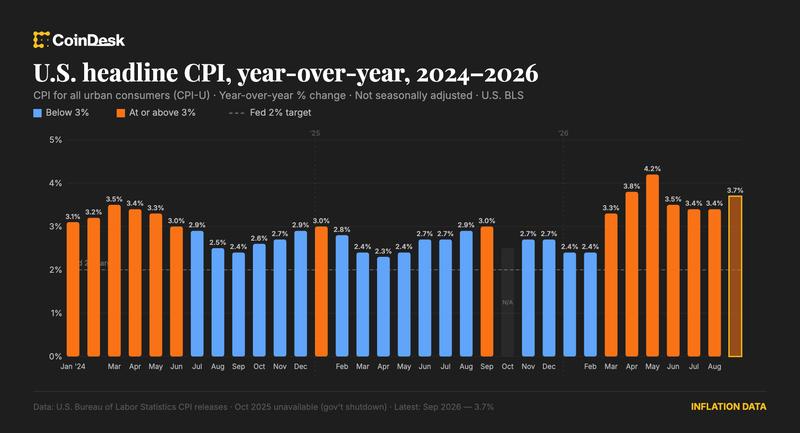
The real price driver right now isn't South Korean policy. It's U.S. inflation data coming this week.
Bitcoin has been oscillating in a $78,000-$84,000 range for weeks. That's not a healthy bull market. That's indecision. Traders are waiting to see whether the Fed starts cutting rates based on inflation coming in hot or cold. If inflation surprises to the downside, Bitcoin could test $85,000. If it's hotter than expected, expect a pullback to $80,000.
South Korea's ban? Noise.
The Lending Crisis Nobody's Talking About
Here's what matters more: Bitcoin miners are getting crushed on financing costs.
Traditional lenders are suddenly scrutinizing crypto miner loans hard. Why? Because AI data center buildouts are consuming all available debt capital, and miners are getting priced out. A miner that could borrow at 8% two years ago is now looking at 12-15%, if they can get financing at all.
The South Korean bank's Bitcoin-backed loan product? That's a pressure release valve. It lets miners and traders use crypto as collateral instead of competing for scarce bank credit with AI companies that have deeper pockets and better credit ratings.
This is how crypto gets integrated. Not through boom-and-bust hype cycles. Through boring debt products.
A miner with $10 million in Bitcoin can now walk into a South Korean bank and borrow operating capital against it. Rates will be higher than traditional loans. Terms will be stricter. But it's optionality. And optionality shifts the power dynamic.
Why the Block List Is Actually Bullish
I know that sounds counterintuitive. But it is.
The exchanges getting blocked are the ones that treated regulation as a suggestion. They operated globally, didn't build out compliance teams, didn't comply with local banking requirements. From a regulatory perspective, they're still operating like it's 2017.
The exchanges that adapted—Upbit, Bithumb, Coinone in South Korea—are thriving. They've got bank partnerships. They've got clean compliance. They've got futures and lending products that the blocklist exchanges can't offer.
Blocking KuCoin and MEXC doesn't crash crypto. It just redirects Korean volume to compliant venues that will pay licensing fees and generate tax revenue for Seoul.
For Bitcoin itself, this doesn't matter. Bitcoin is decentralized. You can't block Bitcoin. You can only block the on-ramps and off-ramps that governments control—banks, exchanges, payment processors. And those are exactly where regulation is tightening.
The result? More demand for peer-to-peer trading. More demand for stablecoins that run on decentralized networks. More demand for non-custodial wallets.
More demand for Bitcoin.
The Real Story
South Korea just confirmed what we've been watching for 18 months: governments have moved past the "ban crypto" phase and into the "regulate and integrate" phase.
The bank loans are the tell. Banks don't launch products for markets they think will disappear. They launch products for markets they think will grow—within boundaries they can monitor.
Bitcoin at $83,000 isn't exciting anymore. But a bank offering Bitcoin collateral loans in a country that's simultaneously blocking unregulated exchanges? That's the real story.
That's the future that's already here.
Discover more in our trading guides.For additional context on BTC market developments, explore our related market analysis.
Expert Analyses (1)

David Okafor
Analyst
Related Market Analysis

Kraken parent Payward to become first crypto firm to buy a EU bank as it expands into deposits, lending

DriveWealth to use Ripple’s RLUSD for stablecoin settlement, cross-border payments
Canada crypto remittances to Asian countries surge 141% to $2.36B: Chainalysis
U.S. September CPI comes in hot, sending bitcoin sharply lower
Related Questions
Frequently Asked Questions
Want Deeper Expert Analysis?
Get insights from our verified crypto analysts with transparent track records.