Self-Custody Crisis: Why $70M in Stolen Bitcoin Is Reshaping Cold Wallet Trust
AI Market Impact Summary

Summary
A sophisticated attack draining $70 million from cold wallets without touching the devices themselves has crypto investors rethinking self-custody security—and turning toward ETFs.
The crypto industry just got reminded of an uncomfortable truth: your cold wallet isn't as cold as you think it is.
A coordinated attack that extracted $70 million from supposedly unhackable cold storage devices has sent shockwaves through the self-custody community. The kicker? The wallets themselves were never compromised. The attack worked around them entirely.
This isn't theoretical anymore. Real money moved. Real security assumptions broke down.
How $70 Million Vanished Without a Trace
The attack exploited what security researchers call a "supply chain vulnerability." Rather than targeting the devices directly, attackers compromised key material before it even reached the hardware. Think of it like stealing someone's house keys during delivery instead of breaking down the door.
Cold wallets—devices like Coldcard, Ledger, and Trezor—operate on a simple premise: keep private keys offline, eliminate digital attack vectors. In theory, bulletproof. In practice? The weakest link isn't always the device itself.
Coldcard has absorbed $38 million in losses from this exploit so far. That's roughly half the total damage, and the company faces serious questions about its supply chain controls and key generation protocols. The broader market is asking harder questions too: If Coldcard—a device specifically engineered for paranoid security—can be exploited like this, what's the point of self-custody?
The ETF Pivot Is Already Happening
Circle just secured a New York trust charter. That matters because it signals institutional confidence in regulated custody solutions. Meanwhile, FTX users are recovering funds through centralized distribution channels. And here's the thing nobody wants to admit: it's working.
Michael Saylor's recent strategy pivot at MicroStrategy is instructive. Analysts have backed his shift away from the "100% bitcoin" dogma toward a more balanced cash position. That's not a betrayal of crypto conviction—it's a recognition that pure maximalism doesn't account for real-world risks.
Self-custody advocates built their movement on a reasonable fear: never trust exchanges, never trust custodians, hold your own keys. FTX burned that bridge with gasoline. But now we're seeing a different risk emerge: holding your own keys doesn't protect you from sophisticated attackers who work upstream from the wallet itself.
The Coldcard exploit represents a category of risk that most retail investors cannot reasonably manage. It requires understanding supply chain security, key generation protocols, entropy sources, and firmware integrity. Most people don't even understand what those terms mean.
What Actually Happened With Coldcard
The attack chain reportedly involved compromised firmware or manufacturing processes. Early reporting suggests attackers may have gained access during production, before devices shipped to customers. Some sources indicate involvement of rogue employees or contractor networks.
Coldcard users began noticing unauthorized transactions around mid-2024. Initial investigation pointed to key leakage—meaning private keys somehow escaped the supposedly isolated device. The company has faced sustained pressure over incident disclosure timelines and whether users received adequate warning.
Here's where it gets messy for the self-custody narrative: Coldcard is considered industry-leading. If they got compromised at this level, what about lesser-known wallet manufacturers? What about devices with fewer resources for security audits?
The Regulatory Counterplay
While self-custody took a hit, regulated custody providers just got a major tailwind. Circle's New York trust charter approval represents months of regulatory scrutiny and compliance framework validation. The ECB's digital euro accessibility standards push. The BIS Project Agorá successfully settling $1 million in tokenized cross-border payments.
There's a coordinated institutional narrative forming: crypto security is improving because regulation is improving. Trust the infrastructure, not the devices.
Tether's Q2 financial results—with excess reserves down $4 billion—show stablecoin operators are tightening. That's not necessarily bad. It signals maturation. But it also signals that centralized stablecoin issuers are facing pressure to maintain regulatory compliance.
Meanwhile, Tether itself has documented excess reserves of several billion dollars. The reserve audit process is becoming more stringent. This matters because if even semi-regulated stablecoins are getting audited harder, then maybe centralized custody isn't as dangerous as self-custody evangelists claimed.
The Bank of Italy Wrinkle
Not everything points toward ETFs and regulated custodians. The Bank of Italy's recent assessment found no consistent cost advantage for stablecoin remittances over traditional rails. That's important because it suggests regulatory infrastructure isn't automatically better—just different.
But cost isn't the real issue driving this shift. Security is.
What Comes Next
Expect three outcomes over the next six months:
First, more retail investors will migrate from self-custody to regulated ETFs and custodians. The Coldcard attack gave them permission to abandon the uncomfortable responsibility of holding keys.
Second, wallet manufacturers will face lawsuits. Coldcard's $38 million loss will likely be followed by class actions. That legal pressure could force adoption of better supply chain controls—or push smaller manufacturers out of business entirely.
Third, self-custody won't disappear, but it will become a niche product for sophisticated users only. Like it probably should have been all along.
The $70 million attack wasn't a failure of cold wallet technology. It was a failure of the narrative around it. Cold wallets are powerful tools. They're not magical. They don't protect against every threat. And for most people, the operational burden of managing them safely probably exceeds the security benefit.
That's not a bull case for crypto. It's a bear case for the idea that every holder should be their own bank. Some people should be. Most shouldn't.
The market is finally figuring that out.
For more insights, explore our trading signals.For additional context on BTC market developments, explore our related market analysis.
Expert Analyses (2)

Hayes Thompson
Analyst

Paul Richardson
Analyst
Related Market Analysis
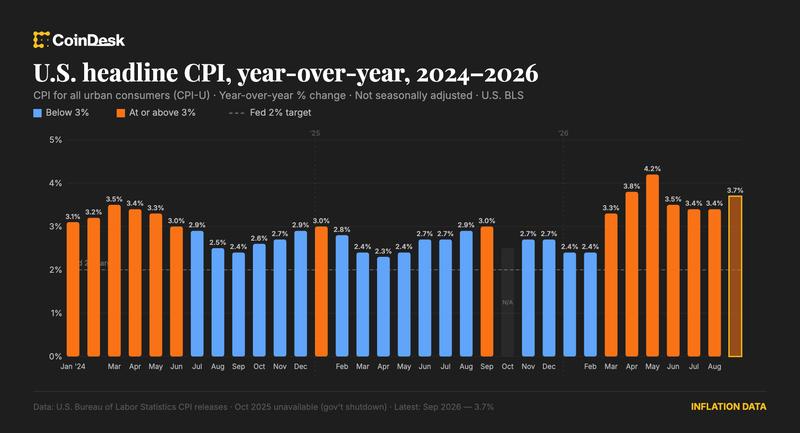
U.S. September CPI comes in hot, sending bitcoin sharply lower
Kraken parent to buy Lithuanian Saldo Bank amid TradFi expansion

Morning Minute: Move Over, Saylor, There’s a New Top Buyer in Town

Evernorth taps Ripple, Kraken, Coinbase and BitGo to put $648 million XRP treasury to work
Related Questions
Frequently Asked Questions
Want Deeper Expert Analysis?
Get insights from our verified crypto analysts with transparent track records.