Back
NeutralImpact 72

Fed's Rate Pause Sparks Bitcoin Rally, But Macro Headwinds Loom

XPERTRAX Editorial10/14/2026, 8:00:50 AM80 views

AI Market Impact Summary

Sentimentbullish
Impact Score72/100
Affected AssetsBTC, ETH
Fed's Rate Pause Sparks Bitcoin Rally, But Macro Headwinds Loom
Related:BTCETH

Summary

Bitcoin surges toward $84K on dovish Fed signals, yet geopolitical tensions and real yields cast doubt on sustainability of the move.

BTC/USDT$82,692.28-0.60%
MA7MA25MA99

Bitcoin climbed past $83,000 on Wednesday after Federal Reserve Vice Chair Raphael Bostic signaled no rate hikes are expected through 2027. The move marks the latest leg of a broader rally that's pushed the asset up roughly 25% since early November. On the surface, the narrative is straightforward: easier monetary policy fuels risk assets. But scratch deeper, and the picture gets messier.

Bostic's comments matter because they set tone for market expectations. When a Fed official—especially one considered hawkish—hints at a prolonged pause, traders repriced their models instantly. The two-year Treasury yield dropped. Equities surged. Bitcoin, as the most rate-sensitive risk asset, followed suit. This is mechanical. This is expected.

What's less obvious is whether this rally has legs.

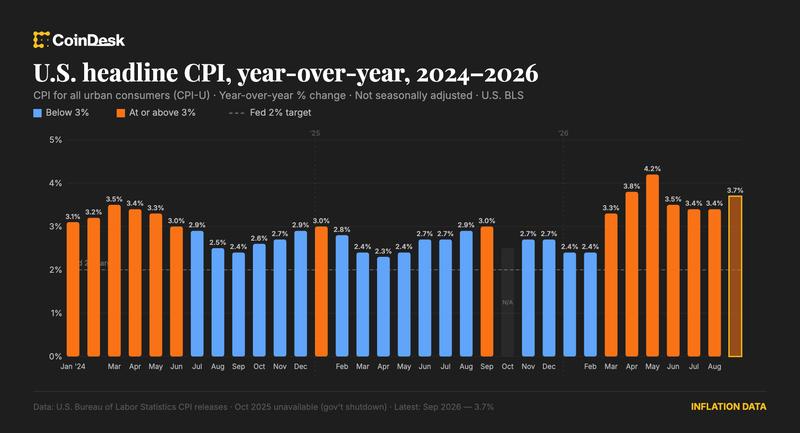
The Fed's inflation data released last week showed core PCE at 2.8% year-over-year, still above the 2% target. Headline inflation sits at 3.2%. A central bank doesn't signal "no rate hikes for three years" when inflation is running hot, unless something else has changed: either inflation is expected to collapse, or the Fed has shifted its tolerance for running hotter. Neither scenario is guaranteed.

Global growth is softening. China's stimulus announcements in October and November have disappointed investors expecting fiscal largess. The European Central Bank faces its own dilemma: cut rates to stimulate, or hold to defend the euro. Japan's Bank of Japan has already hiked, locking in tighter policy when the rest of the world eases. This coordination failure matters for Bitcoin, which trades as a risk-on asset but benefits from relative easing in reserve currencies.

Meanwhile, geopolitical risk is creeping higher. Oil prices have stabilized around $70-75 per barrel, down from $90 earlier this year, but Middle East tensions remain unresolved. If conflict escalates, energy prices spike. Inflation accelerates. The Fed's dovish hand gets forced. Bitcoin rallies built on rate-cut expectations typically buckle when inflation data arrives.

The whale activity flagged in recent reports adds another layer of noise. A Bitcoin holder who bought in early 2020 and held through every crash—the $6,500 lows in March, the $17,600 crash in 2022—just moved $377 million worth of BTC. This could signal conviction. It could also signal profit-taking. Historical whale movements are ambiguous until price action clarifies intent.

What traders should actually watch: real yields. Bitcoin's correlation to negative real interest rates (nominal rates minus inflation) has held remarkably steady over the past four years. The 10-year real yield sits around 2.1%, near its highest levels since 2008 excluding the 2022-2023 period. If real yields stay elevated, Bitcoin's upside is capped, regardless of how low nominal rates fall. The asset needs either nominal rate cuts deep enough to turn real yields negative, or inflation accelerating back to 4-5% to do the work. Neither is baked into current Fed expectations.

Bitcoin at $83K-$84K reflects current Fed messaging, not fundamental shifts in monetary regime. The asset has priced in a soft landing, continued easing, and stable geopolitics. That's a crowded trade. One inflation print above expectations—or one geopolitical flare-up—unwinds it fast.

The real test comes in December when PCE data drops, followed by January's employment report. If inflation stalls the rate-cut narrative, Bitcoin's near-term support levels around $75K become relevant again. If Bostic's dovish tone holds and inflation cooled faster than expected, then $90K is in play.

For now, the move is valid. The fundamentals support easier policy ahead. But Bitcoin traders betting on Bostic's word alone should remember: the Fed changes its mind. Markets have priced in three to four more rate cuts over the next 18 months. That's an aggressive bet. Hedging leverage here isn't paranoia. It's prudence.

For additional context on BTC market developments, explore our related market analysis.

Expert Analyses (3)

Omar Hassan

Omar Hassan

Analyst

BULLISH
Look, the Fed's dovish pivot is real, and it's worth taking seriously. Bostic's comments about no rate hikes through 2027 have fundamentally shifted the macro backdrop—that's not noise, that's the foundation of this rally. Bitcoin at $83,500 reflects genuine institutional recalibration around monetary policy expectations. From my vantage point here in Dubai, I'm watching how this plays out for Gulf region allocations. Our sovereign wealth funds and family offices have been waiting for clarity on rates before deploying meaningful capital into crypto, and this dovish signal removes a major friction point. That said, the article nails the uncomfortable truth: inflation at 2.8% core PCE is still above target, and real yields at 2.1% remain elevated historically. This creates a squeeze. Bitcoin typically thrives in negative real rate environments, not positive ones. The mechanics of the rally are sound—easier policy ahead usually supports risk assets—but the foundation feels a bit softer than we'd like. The coordination failure globally (ECB hesitating, BOJ already hiked, China disappointing) adds uncertainty. My read is that we're in a window of opportunity driven by rate expectations, but it's not a license to be reckless. The technical setup confirms the bullish bias—we're in a clear uptrend with neutral RSI providing room to run. But I'm watching real yields religiously. If inflation data surprise higher or geopolitical tensions spike oil prices, this narrative inverts quickly. For institutional players in the MENA region particularly, this is the moment to build positions strategically, not all-in. The next 6-8 weeks matter enormously for confirming whether this is a structural macro shift or a liquidity-driven bounce. For more insights, explore our trading signals.
Sofia Rossi

Sofia Rossi

Analyst

NEUTRAL
Ascolta, this Fed pause narrative is giving me mixed feelings, and let me explain why like I would to a friend over espresso. Yes, Bostic's dovish signal is real, and yes, Bitcoin's 25% rally since November reflects genuine monetary easing expectations. This mechanical repricing is textbook—lower real rates traditionally benefit non-yielding assets like Bitcoin. But here's where I get cautious: we're watching inflation data that's still running 2.8-3.2%, well above the Fed's 2% target. A central bank doesn't commit to zero rate hikes through 2027 when inflation is hot unless they're either very confident it collapses (unlikely given geopolitical risks and China's disappointing stimulus), or they've shifted their tolerance threshold. Both scenarios carry hidden risks. What really concerns me as someone who analyzes macro flows and yield sustainability is the real yield picture. The article flags this brilliantly—the 10-year real yield sits around 2.1%, near 2008 highs. This is crucial, amico. Bitcoin's four-year correlation to negative real rates has been reliable, but elevated real yields create a headwind. If the Fed cuts nominal rates but inflation stays sticky, real yields don't compress as much as the market is currently pricing in. This is where the rally gets squeezed. The whale activity moving $377 million in Bitcoin? I see both interpretations—could be conviction, could be smart money taking profits before macro data arrives. The ambiguity itself is a warning sign. On the technical side, RSI at 48.7 is genuinely neutral—we're not overbought, but we're also not showing explosive momentum conviction. The price sits at the highs of recent ranges, which means we're vulnerable to a pullback if real yields don't compress as expected. My honest assessment: this rally has legs only if we see concrete evidence that inflation is genuinely collapsing and the Fed's rate-cut path holds. Without that confirmation, I'm treating this as a tactical bounce, not a structural trend. Watch the next inflation print like a hawk. For more insights, explore our trading guides.
Sarah Chen

Sarah Chen

Analyst

NEUTRAL
The Fed's dovish pivot under Bostic's comments has mechanically driven BTC past $83,500, but this rally sits on fragile macro foundations. Yes, the rate-pause narrative is supporting risk-on sentiment across Asian markets—I've seen strong accumulation flows in Singapore and Hong Kong desks this week—but the article correctly identifies the core tension: core PCE at 2.8% doesn't align with three years of rate pause expectations. That's not sustainable messaging. From a technical perspective, BTC is trading neutrally at RSI 48.7 with tight consolidation between MA7 and MA20, suggesting we're in a holding pattern rather than a confirmed breakout. The real yield situation is critical here—at 2.1% on the 10-year, we're actually in restrictive territory for risk assets, which contradicts the bullish narrative. I'm watching for how Asian session traders price this overnight; historically, the lack of coordination between major central banks (BoJ tightening while Fed pauses) creates fragmentation that hurts BTC's risk-on premium. The whale movement of $377M signals neither conviction nor clear distribution—it's noise without price confirmation. Until we see either a sustained break above $87,684 with conviction or inflation data that actually validates the Fed's dovish stance, this rally remains tactically vulnerable.

Frequently Asked Questions

Bitcoin surged because Bostic signaled no rate hikes through 2027, lowering borrowing costs and supporting risk assets. Easier monetary policy historically benefits Bitcoin as an alternative asset.
Sustainability depends on inflation staying below 3% and geopolitical stability. Real yields at 2.1% still represent a headwind. If inflation accelerates or rates stay higher than expected, Bitcoin could face pullback pressure toward $75K.
Inflation data disappointing on the downside. If December's PCE report shows inflation above 3%, the Fed's dovish guidance loses credibility, and rate-cut expectations compress. This would likely trigger a Bitcoin selloff as traders reassess the macro backdrop.
#Bitcoin#Federal Reserve#rate hikes#crypto market#monetary policy

Want Deeper Expert Analysis?

Get insights from our verified crypto analysts with transparent track records.