Binance's Data Leak Exposes the Real Cost of Compliance Theater
AI Market Impact Summary

Summary
Binance handed user data to Russian authorities, leading to a Ukrainian donor's arrest. The incident reveals how exchanges weaponize compliance to appear legitimate while enabling authoritarian surveillance.
Binance didn't just break a rule. It handed a loaded gun to a government that knows how to use it.
The exchange provided user data to Russian authorities that directly led to the arrest of a Ukrainian donor. This wasn't a data breach. This wasn't hackers. This was Binance's compliance team, following procedures, cooperating with what it probably treated as a routine request from a major economy.
The timing matters. Russia has been systematically targeting Ukrainian donors and activists abroad since the 2022 invasion. Every piece of information becomes a weapon. A name. An address. A transaction history. Binance gave them all of it.
Here's what we know: The Ukrainian national sent donations through Binance. Russian authorities requested the data. Binance complied. The individual was arrested in a third country. The chain of cause and effect is clear enough that it warranted coverage in major outlets and raised immediate questions about how the largest crypto exchange handles geopolitical pressure.
This isn't new behavior for Binance. The exchange has a documented history of cooperating with law enforcement requests across multiple jurisdictions. That's technically defensible—exchanges do need to follow legal demands. But the Ukraine case reveals the hidden cost of that compliance: it can literally endanger people.
The crypto industry spent years building a narrative around decentralization and freedom from government control. Then it built centralized exchanges. Then those exchanges started hoarding user data. Then they started handing it over to authoritarian regimes. The original promise died somewhere between the whitepaper and the compliance officer's inbox.
The Compliance Theater Problem
Binance's playbook is familiar. Comply visibly with Western regulators. Get licenses. Hire compliance teams. Publish transparency reports. All of this creates the appearance of legitimacy. But legitimacy is theater when it's selective.
When the US Treasury sends a subpoena, Binance fights it in court or complies with careful conditions. When Russia sends a request, the friction seems to disappear. The difference isn't legal—it's political and commercial. Binance operates in Russia through partnerships and indirect structures. Refusing Russian authorities creates friction in a market that's still valuable despite sanctions.
Ukraine's government has been asking crypto exchanges for months to freeze accounts connected to Russian oligarchs and sanctioned entities. Most exchanges have complied, at least publicly. But when Russia asks for data on Ukrainian donors, the same exchanges that tout their compliance infrastructure suddenly become very useful to Moscow.
The irony is sharp. Binance voluntarily delisted accounts connected to Russian sanctions. But it apparently didn't voluntarily protect Ukrainian activists from Russian surveillance. The difference matters because it shows compliance is a tool, not a principle. It's deployed where it benefits the exchange commercially or politically, and withdrawn where it costs them.
Who Else Is Doing This?
Binance isn't the only exchange handling user data. Every major platform—Kraken, Coinbase, Gemini—maintains user databases and processes legal requests. But not every exchange has the same exposure to Russian pressure. Binance has deeper Russian operations, more Russian users historically, and more complex corporate structures that might make resisting authoritarian requests harder.
The real question is what incentives actually prevent exchanges from handing over data when political pressure arrives. In traditional banking, there are legal frameworks, judicial oversight, and consequences for misuse. In crypto, there are compliance teams and vague principles.
Kraken's recent partnership with Glasswing and access to Claude Mythos for security research sounds forward-thinking. Good. But security research means finding bugs. It doesn't mean refusing to hand user data to governments. Those are different problems requiring different solutions.
The Regulatory Disconnect
Here's the absurdity: Austria just fined Bitpanda $81,000 under MiCA—Europe's new crypto regulation—for compliance failures. Meanwhile, Binance's decision to hand data to Russia probably violates multiple laws and ethical standards, but who enforces it? Not Russia. Not the country where the arrest happened. Not the US, which has other issues with Binance to pursue.
MiCA creates requirements for crypto exchanges operating in Europe. It mandates KYC, AML procedures, and consumer protection. But it doesn't address what happens when an exchange uses compliant data collection to enable authoritarian surveillance in third countries. The regulation is designed for stability and consumer protection, not geopolitical ethics.
That gap is the real problem. Exchanges can be fully compliant with Western regulations and still facilitate human rights abuses abroad. The law moves slowly. Crypto moves fast. And authoritarian governments don't wait for regulatory frameworks.
What Changes Now?
Probably nothing immediate. Binance will issue a statement. There will be calls for investigation. The exchange might adjust its policies on Russian data requests. But the structural problem remains: centralized exchanges hoarding user data are inherently vulnerable to pressure from powerful governments.
This is exactly what crypto was supposed to solve. Decentralized exchanges don't maintain user databases. They can't comply with requests to hand over data because the data doesn't exist in any single place. DEXs have their own problems—liquidity, user experience, security flaws—but "handing user data to authoritarian governments" isn't one of them.
The Ukraine incident won't spark a migration to DEXs. Most users prefer the simplicity and liquidity of centralized exchanges. But it should change how people think about storing value on platforms that maintain centralized databases. It's not just a regulatory risk. It's a geopolitical one.
Binance's data leak shows compliance theater in its starkest form. The exchange wrapped itself in legitimate-looking procedures and then used them to enable authoritarian surveillance. That's not a bug in the system. That's the feature, deployed at exactly the moment it mattered most.
For additional context on BTC market developments, explore our related market analysis.
Expert Analyses (2)

Robert Hayes
Analyst

Elena Volkov
Analyst
Related Market Analysis
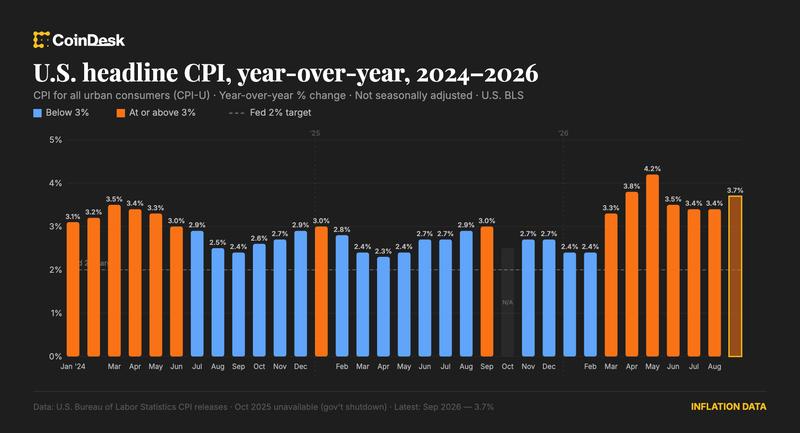
U.S. September CPI comes in hot, sending bitcoin sharply lower
Kraken parent to buy Lithuanian Saldo Bank amid TradFi expansion

Morning Minute: Move Over, Saylor, There’s a New Top Buyer in Town

Evernorth taps Ripple, Kraken, Coinbase and BitGo to put $648 million XRP treasury to work
Related Questions
Frequently Asked Questions
Want Deeper Expert Analysis?
Get insights from our verified crypto analysts with transparent track records.